
Accelerating Safety: AIHS Conference
This year’s AIHS annual safety conference was held in Adelaide, with the theme “Accelerating Safety”. Our GM, Andrea Rowe, attended the conference and shares her highlights with us.
The theme “Accelerating safety” aligns with key presentations advocating ideas like; shifting from policies and blaming people to designing better work systems, stronger relationships, inclusive environments, and proactive responses to emerging risks like climate and AI.
Accelerating safety was also the theme of the field experience at Tailem Bend Race Track, South Australia's state-of-the-art motorsport facility. Conference attendees were invited to accelerate, with caution, participate in go karting, driving courses, and treated to some “hot laps”.
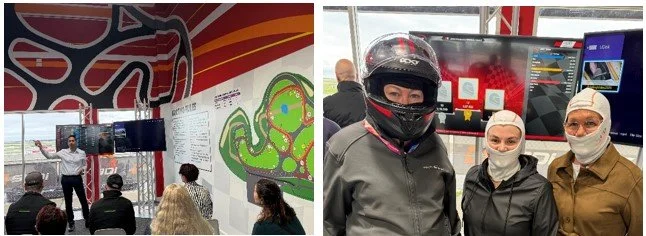
Andrea at the Tailem Bend Race Track Field Experience
Stop blaming people – Fix the system
The strongest message is: Psychosocial harm is rarely about “bad people” - it comes from how work is designed and managed.
Bullying, stress and harm are driven by:
Poor work design eg rostering, workload, unclear roles,
Weak performance management,
Poor leadership and team relationships.
The focus should shift from reactive investigations to proactive system review and risk prevention. The question is not “who caused it”? but “what conditions increased the likelihood of this occurring”?
A consistent message across the conference presentations is that:
1) Strong relationships = lower psycho-social risk, and
2) Poor relationships = higher risk, even with good systems.
What matters in practice:
Respectful, civil interactions,
Balanced & fair workload and recognition,
Trust before giving feedback.
Psychosocial risk is being treated too simplistically
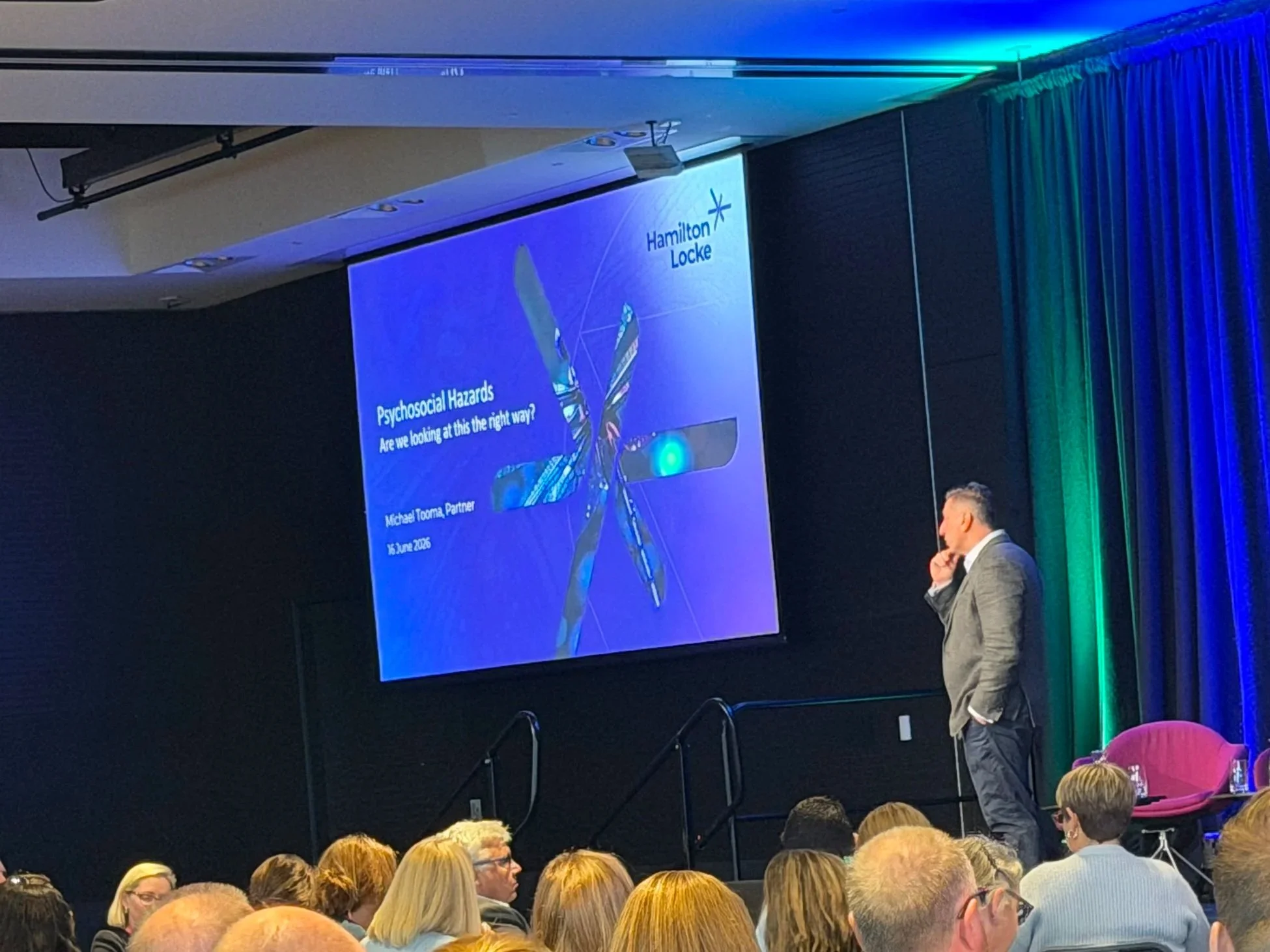
Safety lawyer, Michael Tooma challenged current practice, saying many organisations are treating all psychosocial hazards as “one problem” and relying heavily on paperwork and risk assessments. This leads to box-ticking instead of real change.
Tooma’s key suggestions are:
Business & managers to treat everyone with respect.
Consider all the different psychosocial hazards eg bullying, work overload, stress, trauma, and AI impacts.
Focus on real human outcomes, not documentation.
Motivate all workers to treat each other with respect.
Design work for the full workforce
An engaging presentation by the proudly neuro-divergent (where person’s brain works differently to most eg spectrum disorder, autism etc) presenter, Nicola Knobel, shared some key stats and advice for businesses.
15 to 20% of workers are neuro-divergent, often un-disclosed.
Workers are not required to disclose their diagnoses.
Traditional systems exclude many people.
New approach to an inclusive workplace:
Don’t wait for individuals to disclose a condition.
Design work to accommodate different needs where possible.
Examples of making the workplace more inclusive:
Clear communication, including providing information in a range of ways eg face to face, visual and written instructions.
Reduced ambiguity in roles.
Flexible environments.
Written follow-up information.
Universal design benefits everyone, not just individuals that disclose as neuro-divergent
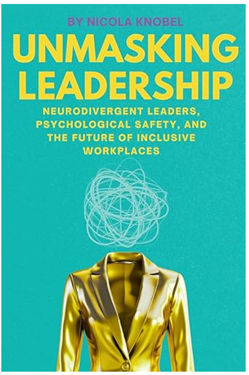
Book to assist leaders “Unmasking Leadership: Neurodivergent Leaders, Psychological Safety, and the Future of Inclusive Workplaces” by Nicola Knobel (Author)
Make risk management a team activity
Effective organisations involve workers in; identifying risks and designing solutions. This builds ownership, trust and stronger team solidity.
Psychosocial risk control works best when it is social (local), not top-down.
Environmental conditions is a major WHS risk multiplier
Climate was reframed as a core Work Health and Safety (WHS) issue, not just an Environmental, Social, and Governance (ESG) issue.
WHS impacts of climate change can include:
Heat stress,
Extreme weather disruptions and need for emergency response,
Air quality,
Increased psychological stress.
Businesses need to shift the approach from reactive to anticipatory planning. Create adaptive systems and integrate risk thinking of climate hazards into the WHS risk management program.
AI and future work must pass the “human test”
Yasmine London shared that Artificial Intelligence (AI) implementation can introduce new workplace hazards, such as:
Increase job insecurity,
Less meaningful work,
Reduced personal relationships,
AI uses stereotypes which can sometimes cause racist or sexist advice,
Create monitoring pressure,
Less personal contact can result in workers being more isolated.
AI can be miss used to bully and shame workers eg artificially generated images.
Position AI as support, not replacement
Business leaders should ask “Does this make workers feel more secure or less?”
Good practice is to:
Involve workers early in decision making,
Include AI risks & correct use in training and policies,
Position AI as support, not replacement,
Maintain human decision-making eg declare AI use where needed and check the AI output before sending.
Next year’s AIHS conference will be in Geelong Victoria.