
How To Manage Contractor Risks

Contractors are often associated with workplace incidents and therefore assumed to be the cause, whereas they are more often poorly briefed on site-specific hazards, safety rules, and work practice expectations.
The answer to this situation is to have a clear process to ensure we only engage competent contractor firms and have an efficient means of confirming all workers have the necessary qualifications for the work they are to undertake, and have been trained in our safety rules and any site-specific hazards or precautions.
So, let’s understand the key principles for contractor management, and then explore how we can deliver these principles in simple terms.
Key Principles for Contractor System
Only engage competent contractor firms eg prequalification confirms safety systems, insurances and company licences.
Monitor currency of contractor insurances and company licences.
System confirms above and does not issue of Work Orders if non-compliant.
Each Work Order to attach or reference our contractor safety rules.
Ensure the workplace is safe for staff, public and contractors, and restrict hazardous areas and tasks i.e. Hazardous areas are locked & signposted and Permit to work system for roof access, hot works, confined space etc.
Provide information about the site hazards, site rules, permits and emergency instructions (contractor workers complete a safety induction)
Confirm contractor worker credentials i.e. licences.
Contractors sign-in at site, only if satisfy above requirements.
Company staff co-ordinate or manage projects (not supervise contractors).
Deliveries and visitors, or “emergency” contractors who are not inducted, are escorted.
How Do We Select a Competent Contractor Firm?
The process of confirming contractor firms are competent and appropriate for work is often called “prequalification”.
This involves confirming things like;
Legal identity of the firm and ABN,
Insurances,
Adequate safety systems in place.
In addition, prequalification captures details of prosecutions and serious workplace accidents and WorkSafe notices.
How Do We Know the Workers are Competent?

Sample contractor sign-in: example of “all good’ green tick
Most businesses use online safety inductions and systems to record individual worker credentials. This speeds up daily sign-in and ensures no contractor is allowed to start work until the digital check confirms “all compliant” eg big green tick.
In this way, site staff only need to confirm the contractors scan in and get green OK tick, and brief workers on any site-specific hazards, rules, work permits required, or unusual risks eg asbestos on site or underground utilities.
Risk Assessment & SWMS for Work
All contractor work needs to be covered by an appropriate safe work procedure. This is consistent with the general duty of care eg Vic OHS Act S.21 & WHS S.19 requires a safe system of work, and safety regulations require a safe work method statement (SWMS) for all high-risk construction work. However, it is best practice to require a SWMS or SWP for all contractor tasks.
Whilst preparation of safe work procedures essentially involves assessment of the immediate risks associated with a task, a project risk assessment should also be completed so the contractor firm can be confident they have identified all significant risks and have the necessary controls in place. Some businesses also provide contractors with a copy of their risk assessment for projects.
How Do We Know They Are Working Safely?
The only way to be confident that safe and compliant work practices are being followed is to monitor and support the people doing the job.
The person best placed to understand the safety of any specialist tasks or equipment being used is for the contractor firm to supervise their own team.
Therefore, host site staff are not “contractor supervisors”, but project co-ordinators or similar title. Let’s not confuse anyone about who is actually supervising the work.
What About Visitors and Emergency Use of Contractors?
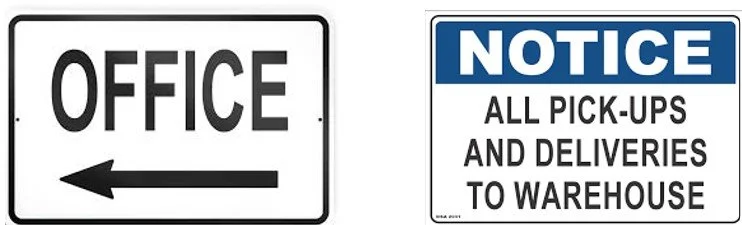
For irregular deliveries to site, which are typically brief and low-risk, we primarily rely on our entry signage to convey our site rules and key directions eg deliveries to Main Office or Warehouse. If the deliveries need to enter restricted areas escort them.

Where a contractor is required for emergency repairs eg water or gas leak, and our regular pre-qualified contractor is not available, escort the contractor while on site. This allows us to alert them to any site-specific hazards, precautions or unusual risks.
Best Practice Online Systems
We at Safety Action work with one of the leading online contractor management firms, Linksafe - Civica.
Safety Action can assist you with:
Designing your onsite content,
Online systems support, and:
Auditing contractors eg Conduct Principal Contractor site audits.
If interested in upgrading your contractor system, training for your team, or an independent contractor audit call us on 03 8544 4300 or email.
