
Importance of Rack Inspections
In busy warehouses and distribution centres, pallet racking is one of the most relied‑upon assets and one of the most overlooked in relation to structural safety.
Most racking quietly supports many tonnes of product for months and years at a time with no real attention. However, even minor damage or incorrect use can compromise its strength and stability, which can result in a sudden collapse. That’s why regular inspections are essential.
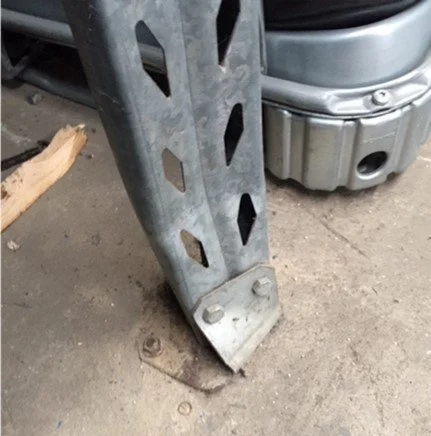
Damaged leg and base plate
Common Issues Found During Inspections
Impact damage from forklifts or pallet jacks.
Overloaded beams or bays.
Incorrect beam placement.
Missing or incompatible components.
Rust or corrosion.
Poorly secured baseplates.
Inadequate aisle clearances.
Unlabelled or unclear load signage.
Every one of these issues can affect structural integrity.
Types of Racking
Whilst most warehouses have steel pallet racking, others may also have:
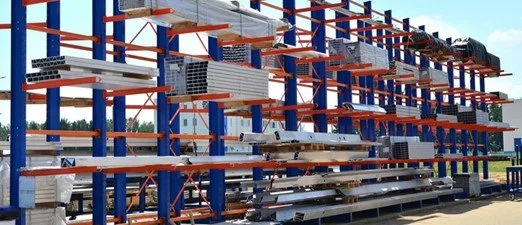
Cantilever Racking.
Drive-Through / Drive-In Racking.
Mobile Racking.
A-Frame Racks.
Home-Made Mild Steel Racks.
General Storage Racks.
Why Are People Confused About Who Can Inspect Racking?
The Australian Standard AS 4084.2 entitled Steel Storage Racking Part 2: Operation and Maintenance was updated in 2023 and introduced new guidance on inspection frequency and competency.
In essence, the standard lists the racking; designers, manufacturers and suppliers as the default category of competent persons recommended to conduct the formal (annual) rack inspections.
This has led many businesses to think they cannot do inspections of their own racking. This is false as each business has prime legal responsibility to ensure their workplace and structures are safe, and therefore need to be equipped to inspect the racking and make decisions on a daily basis as to safety of their racking.
Irrespective of whether your local team are conducting periodic internal (informal) rack inspections, or the annual (formal) rack inspection, they need to be trained and competent to do so effectively.
Remember, if inspections are conducted by your local team you may ultimately require the rack supplier to attend in any event eg whenever deficiencies are identified which require replacement parts or specialist installation.
Safety of Racking
The minimum safety requirements for the design, installation, and ongoing use of steel pallet racking systems include:
Installed and configured correctly,
Used within its rated load capacity,
Monitored through regular inspections, and
Maintained safe eg repaired only with compatible and approved components.
The standard recommends the maximum interval of 12 months for racking inspections, or more frequently in high‑traffic areas or high‑risk environments.
Types of Inspections Recommended
Best practice businesses have four levels of rack inspections, per below:
1. Daily Hazard Reporting eg observed hazards or rack strike incidents.
2. Weekly Walk-Through Checks Conducted by warehouse staff to detect obvious damage or unsafe use.
3. Regular In-Formal Inspections Responsible trained staff inspect racking with a checklist eg monthly or quarterly.
4. Annual (Formal) Inspection Specifically trained and experienced person(s) conduct the formal annual rack inspection against a detailed checklist covering all relevant items for structural safety and recommendations from AS 4084.
How Quickly Do We Need to Act?
The racking standard offers guidance on this question and recommends:
a) High (Red) Risk – Immediate Action Required
Immediate action eg unload racking and tag-out of service until serious defect(s) are fixed, if identified deficiency exceeds the relevant tolerance by more than twice. For example, if column bending inward exceeds limit of 3mm by more than 6mm.
b) Medium (Yellow) Risk – Act as soon as Practicable
Take action as soon as practicable if damage does not exceed tolerance limit by more than 2.
c) Low (Green) Risk – OK But Monitor Any Damage
When any damage is within the relevant limits it is deemed serviceable and no immediate action required eg monitor any minor deficiencies in ongoing inspections.
In a fast‑moving warehouse environment, taking the time to assess your racking could be the step that prevents a major incident.
If your racking hasn’t been assessed in the past 12 months, or if you’re unsure when it was last inspected, now is the perfect time to schedule a review.
Safety Action Rack Inspection Services
If interested in a quote for our highly qualified and experienced safety engineer to conduct an independent inspection of your racking or to provide a rack inspection workshop for your local team, contact us:
Phone: 03 85 444 300 or Email: enquiries@safetyaction.com.au
