
Vision Zero and ISSA: More than simply “Zero Injuries”
Last month I reviewed the Working On Safety (WOS26) Conference in Cyprus and shared some of the learnings. One of the other interesting WOS discussions for me concerned Vision Zero. The conference included presentations on the topic by Gerard Zwetsloot and poster by ISSA- Section on Machinery.
Vision Zero can easily be misunderstood as simply setting a target of zero injuries. The contemporary approach is considerably broader.
Zero Risk Does Not Exist
It explicitly recognises that zero risk does not exist, people and organisations make mistakes, short-term solutions can undermine better long-term solutions, and workplaces operate within an increasingly complex and unpredictable world.
Vision Zero therefore treats “zero” as an aspiration, rather than assuming every risk can literally be eliminated.
It has also evolved from a predominantly safety-focused model into one encompassing Safety, Health and Wellbeing. It encourages organisations to use leading as well as lagging indicators and, importantly, to regard incidents and errors as opportunities to learn rather than events that should be hidden because they adversely affect a zero-injury statistic.
The International Social Security Association (ISSA) expresses Vision Zero through its Seven Golden Rules:
Take leadership and demonstrate commitment;
Identify hazards and control risks;
Define targets and develop programmes;
Ensure a safe and healthy, well-organised system;
Ensure safety and health in machines, equipment and workplaces;
Develop competence; and
Invest in people through participation.
ISSA has also developed proactive leading indicators covering areas such as leadership, risk management, learning from unplanned events, induction, pre-work briefings, planning, procurement, innovation and change, training and employee suggestions.
I was particularly interested in the emphasis on worker-friendly design. Principles discussed included designing for people and human factors, early intervention, elimination and minimisation, participation, autonomy and control, simplification and “forgiving” systems that recognise human error will occur.
Where is Vision Zero in Australia?
An interesting observation from WOS26 was that Vision Zero appears to have a much stronger profile internationally than within Australia. While Australia has adopted Vision Zero in road safety, our national framework from Safe Work Australia is the Australian WHS Strategy 2023–2033, with the vision “Safe and healthy work for all” and measurable injury and fatality reduction targets. The ISSA Vision Zero framework, by comparison, is built around an aspiration of zero harm and integrates safety, health and wellbeing through its Seven Golden Rules and proactive leading indicators.
ISSA International Section on Machine and System Safety
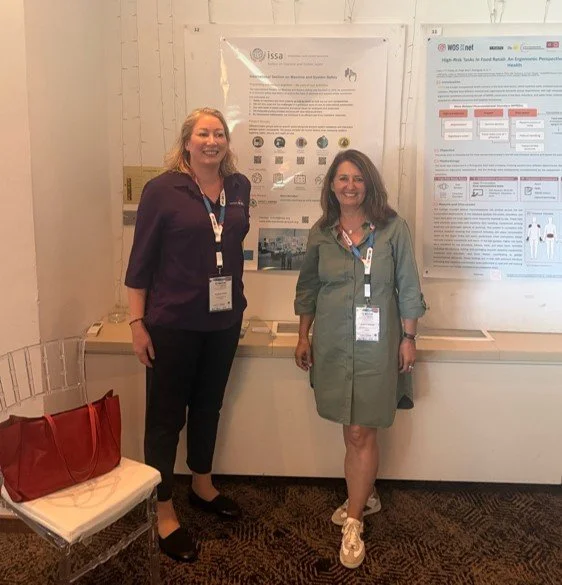
The conference also highlighted the work of the ISSA International Section on Machine and System Safety, including projects on control devices, digital manufacturing, explosion protection, human factors and ergonomics, and the prevention of defeating machinery safeguards.
These concepts align strongly with what we see in practical machinery safety. We should not design a system that is safe only when a worker behaves perfectly. Good design anticipates foreseeable human behaviour and makes serious harm impossible or difficult even when mistakes occur.
Safety Action is proud to be a member of ISSA Section on Machinery & System Safety.
For more information visit:
ISSA Section on Machinery and System Safety